Be yourself; Everyone else is already taken.
— Oscar Wilde.
This is the first post on my new blog. I’m just getting this new blog going, so stay tuned for more. Subscribe below to get notified when I post new updates.
Be yourself; Everyone else is already taken.
— Oscar Wilde.
This is the first post on my new blog. I’m just getting this new blog going, so stay tuned for more. Subscribe below to get notified when I post new updates.
Abu Jarr said: I said, O Messenger of Allah, give me advice. He said: I advise you to fear Allah.
Because it will beautify all your work.
I said, give me more advice.
He said: Make it your duty to recite the Qur’an and remember Allah and talk about Him. It will discuss you in the sky and it will be the light of your path on earth.
I said, give me more advice.
He said: The longer you stay silent, the less you talk. It will be a tool to drive away the devil and will help you in your religious work.
There are three types of judges. One class of judges is Jannati, and two classes of judges are Jahannami. (1) The judge who realizes the truth and judges accordingly is in Paradise. (2) The judge who can realize the truth but does not judge accordingly is hellish. (3) Another class of judges cannot comprehend the truth. Judging on the basis of ignorance, he is also hellish. (Abu Dawood)

A lost circumcision 😢
One of the disciples said:
The Prophet (peace and blessings of Allaah be upon him) used to instruct us to walk barefoot. (Abu Dawood, 4160)
Walking barefoot is the realization of one’s own smallness! Understand your own helplessness! The insignificance of the world can be felt! This is why Imam al-Manawi said:
“If a person is sure that his feet will not be soiled or harmed, then he should walk barefoot from time to time to soften his mind! This is why the Prophet (peace and blessings of Allaah be upon him) used to walk with and without shoes. The Companions used to do the same thing! “(Faydul Qadir, 1/318)
We see many people walking barefoot on TV! Many people read the book of novels and walk barefoot all night! But if we walked barefoot in love with the Prophet (peace and blessings of Allaah be upon him), some rewards would be added to our record! Taqwa would increase in the heart! This lost Sunnah explains our helplessness with our fingers in our eyes. This feeling brings us – we are miskin! Everything we have in our lives is given by Him! This world is nothing in front of the creator of the universe!
What are we running after?
আপনি কি জানেন ? আপনার দেহের প্রতিটি জোড়া ও গিটের জন্য শুকরিয়া স্বরূপ আপনাকে প্রতিদিন কি করতে হবে ?
~ প্রতিদিন সকালে দান সদাকা করতে হবে। কিন্তু প্রায় ৩৬০ টা জোড়ার জন্য ৩৬০ টা সদাকা করা তো চারটি খানি কথা না। ঠিক এ কারনেই রাসূলুল্লাহ (সাঃ) সালাতুদ দোহা নিয়মিত আদায় করার জন্য উৎসাহ প্রদান করেছেন।
এছাড়াও আপনি কী টাকা পয়সা খরচ না করেই প্রতিদিন হজ্জ ও ওমরার পরিপূর্ণ সওয়াব পেতে চান??
~ তাহলে আপনাকে সালাতুদ দোহা সম্পর্কে জানতে ও নিয়মিত আদায় করতেই হবে।
.
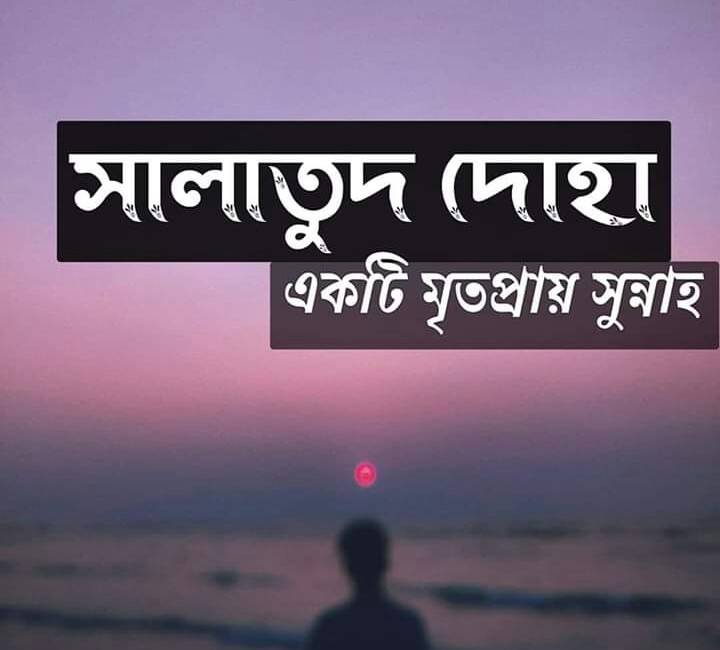
সালাতুদ দোহা !!
এইটা আবার কোন সালাত?
কখন? কিভাবে পড়ব??
.
দোহা একটি আরবী শব্দ। যার অর্থ পূর্বাহ্ন বা দিনের প্রথম অংশ। ফারসী ভাষায় একে ‘চাশত’ বলা হয়। সূর্যোদয়ের পর থেকে মধ্যাহ্ন বা দুপুরের পূর্ব পর্যন্ত সময়কে আরবীতে দোহা বলা হয়।
.
বিভিন্ন সহীহ হাদিসে এ সালাতকে ‘সালাতুল আওয়াবীন বা আল্লাহওয়ালাগণের সালাত’ বলে অভিহিত করা হয়েছে।
.
আমাদের দেশে (বাংলাদেশ) অনেকে একে ‘ইশরাকের সালাত বা সূর্যোদয়ের সালাত’ ও বলে থাকে। যদিও হাদিসে সালাতুদ দোহা শব্দটিই শুধুমাত্র ব্যবহার করা হয়েছে।
.
তাহলে সূর্যোদয়ের পর থেকে দুপুরের পূর্ব পর্যন্ত যেকোনো সময়েই এই সালাত পড়া যায়। তবে সূর্যোদয়ের পর থেকে ৯/১০ টার ভিতরে পড়ে নেয়া বেশি ভাল।
.
দোহা’র সালাত ২ রাকাত থেকে ১২ রাকাত পর্যন্ত আদায় করা যায়। সুন্নাত সালাত যেভাবে পড়েন ঠিক তেমন ভাবেই, নতুন কোনো নিয়ম নাই।
দুই দুই রাকাআত করে পড়তে হয়।
.
নফল সালাতের মধ্যে তাহাজ্জুদের পরেই এর স্থান। এ সালাতের বিশেষ গুরুত্ব, মর্যাদা ও সওয়াবের বিষয়ে অনেক সহীহ হাদীস রয়েছে।
.
আনাস (রাঃ) বলেন, আল্লাহর রাসূল (সাঃ) বলেছেন,
” যে ব্যক্তি ফজরের সালাত জামাতে আদায় করে বসে বসে অাল্লাহর যিকির করবে সূর্যোদয় পর্যন্ত, এরপর দুই রাকাআত সালাত অাদায় করবে, সে একটি হজ্জ ও একটি ওমরার সওয়াব অর্জন করবেঃ পরিপূর্ণ, পরিপূর্ণ, পরিপূর্ণ (হজ্জ ও ওমরা)” (তিরমিযী ২/৪৮১, নং ৫৮৬)।
.
আবু হুরাইরা (রাঃ) বলেন,
” আমার প্রিয়তম বন্ধু রাসুলুল্লাহ (সাঃ) আমাকে তিনটি বিষয়ের উপদেশ দিয়েছেন
*. প্রত্যেক মাসে তিনদিন সিয়াম পালন
*. দোহা (চাশত) এর দু রাকাআত সালাত আদায়
*. ঘুমানোর আগে বিতর আদায়”
( বুখারী ২/৬৯৯, নং ১৮৮০)
( মুসলিম ১/৪৯৯, নং ৭২১,৭২২)
.
আবু যার (রাঃ) বলেন,
” রাসূলুল্লাহ (সাঃ) বলেছেন, মানুষের দেহের প্রত্যেক জোড়া ও গিটের জন্য শুকরিয়া স্বরূপ প্রতিদিন সকালে দান করা তার জন্য আবশ্যকীয় দায়িত্ব।…… দু রাকাত দোহার সালাত আদায় করলে এ দায়িত্ব পালিত হয়ে যাবে”
( মুসলিম ১/৪৯৮, নং ৭২০)
এছাড়াও অনেক হাদিস রয়েছে এই ব্যাপারে। আসুন আমরা নিয়মিত এই মৃতপ্রায় সুন্নাতটি জীবিত করার চেষ্টা করি।

A college entrance exam is a standardized aptitude test that measures your aptitude in various areas such as verbal, math, analytical and writing skills. These tests are not designed to measure what you have learned in school; rather, they measure your potential to perform well in the future.
The loneliest people are the kindest. The saddest people smile the brightest. The most damaged people are the wisest. All because they do not wish to see anyone else suffer the way they do.
This is an example post, originally published as part of Blogging University. Enroll in one of our ten programs, and start your blog right.
You’re going to publish a post today. Don’t worry about how your blog looks. Don’t worry if you haven’t given it a name yet, or you’re feeling overwhelmed. Just click the “New Post” button, and tell us why you’re here.
Why do this?
The post can be short or long, a personal intro to your life or a bloggy mission statement, a manifesto for the future or a simple outline of your the types of things you hope to publish.
To help you get started, here are a few questions:
You’re not locked into any of this; one of the wonderful things about blogs is how they constantly evolve as we learn, grow, and interact with one another — but it’s good to know where and why you started, and articulating your goals may just give you a few other post ideas.
Can’t think how to get started? Just write the first thing that pops into your head. Anne Lamott, author of a book on writing we love, says that you need to give yourself permission to write a “crappy first draft”. Anne makes a great point — just start writing, and worry about editing it later.
When you’re ready to publish, give your post three to five tags that describe your blog’s focus — writing, photography, fiction, parenting, food, cars, movies, sports, whatever. These tags will help others who care about your topics find you in the Reader. Make sure one of the tags is “zerotohero,” so other new bloggers can find you, too.

 Md.shahriarayon